

What is HDD?
Instead of tearing up roads, rivers, railways, or buildings, Horizontal Directional Drilling (HDD) crews drill a controlled underground arc, then pull the pipe through that hole.
How it works (three steps)
Pilot hole – A steerable drill head bores a small, precise path underground.
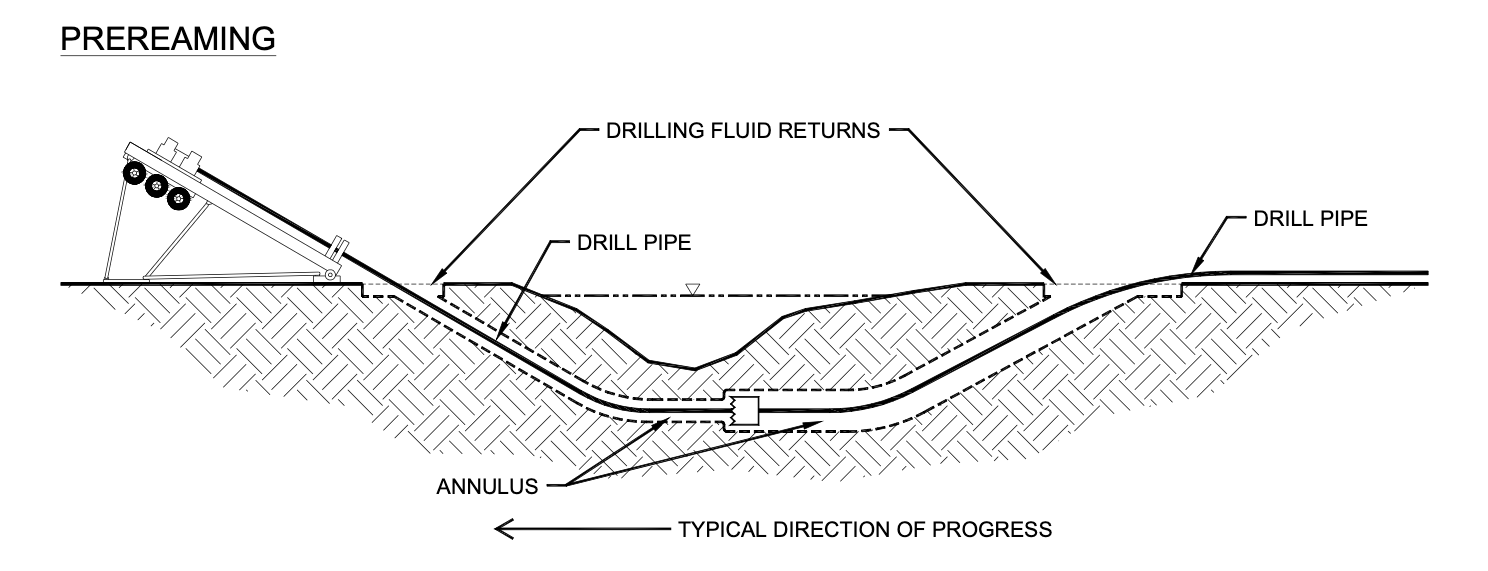
Reaming – The hole is enlarged to the required diameter.
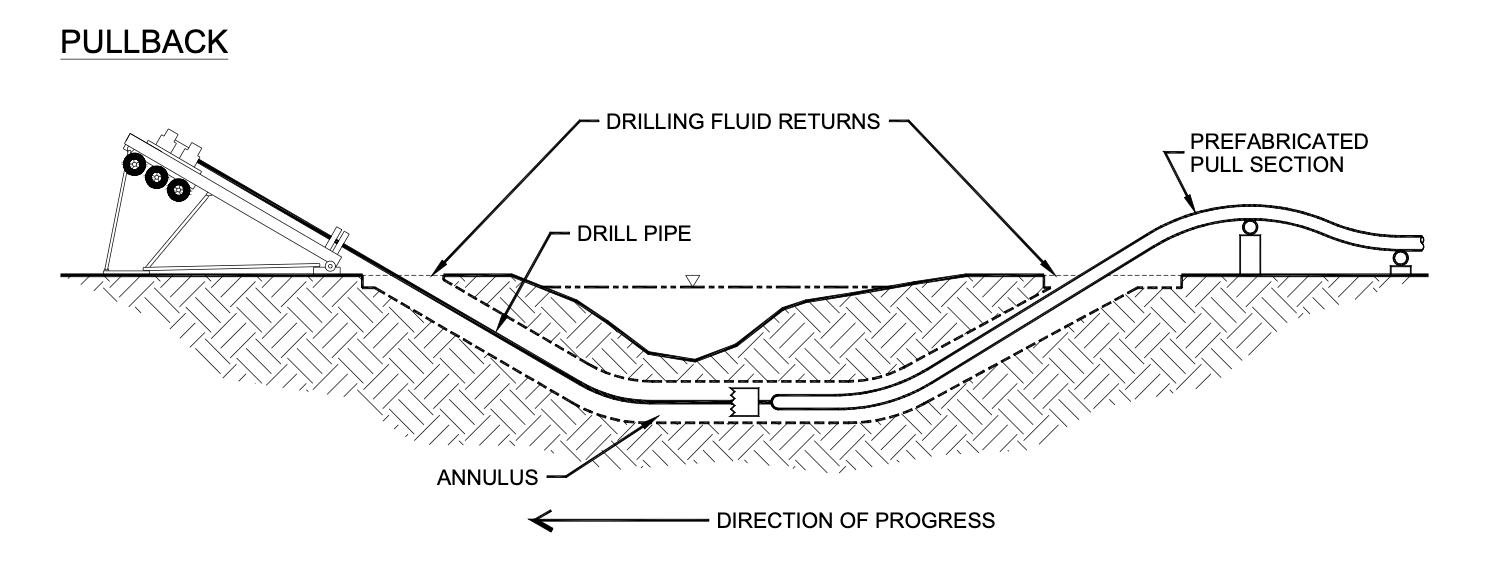
Pullback – The pipe or conduit is pulled back through the finished bore.
Why it’s used
Minimal surface disruption
Faster than open-cut excavation in developed areas
Ideal for crossings under roads, rivers, rail lines, wetlands, and buildings
Reduced environmental and restoration costs
What it installs
Water and sewer mains
Gas and oil pipelines
Electrical and fiber-optic conduits
Key distinction
It’s called “drilling,” not boring, because it uses drilling rigs, drill pipe, steering tools, and drilling fluid—technology adapted from the oil and gas industry.
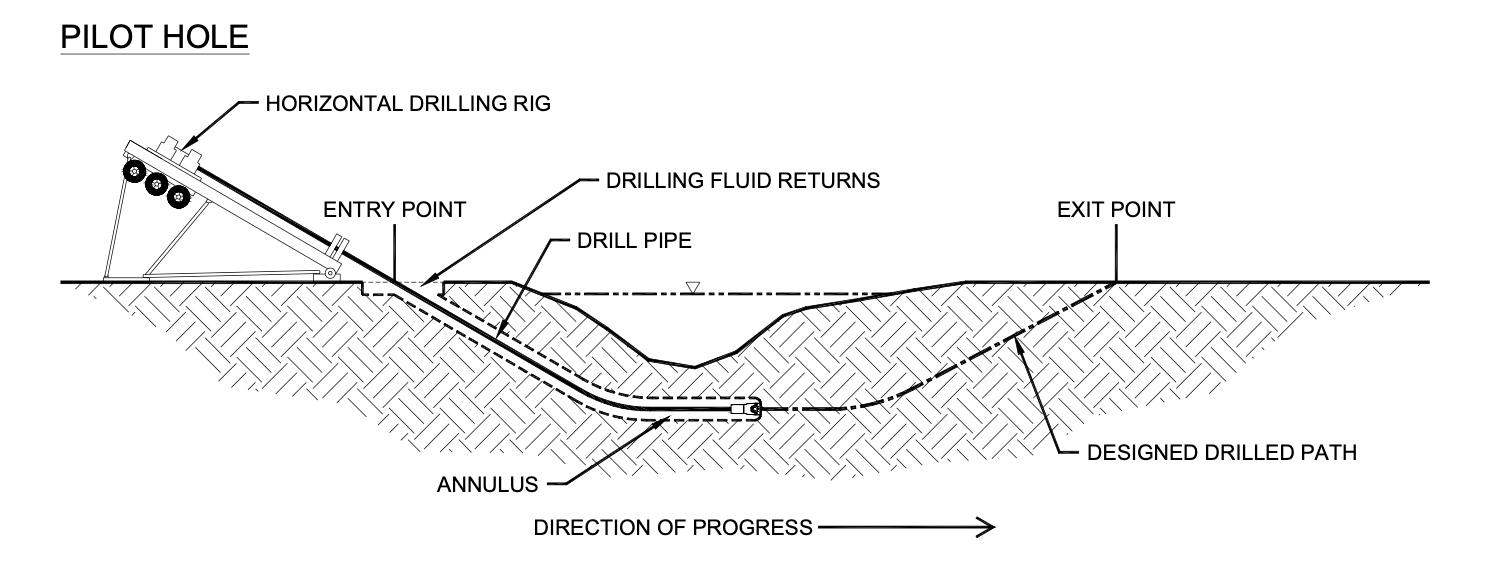
Pilot Hole Drilling
A small-diameter hole is directionally drilled along a precisely engineered path.
STEP ONEReaming: Hole Enlargement
The pilot hole is progressively enlarged to the required diameter for the pipeline.
STEP TWOPipeline Pullback
The pipeline is pulled back through the enlarged hole into its final position.
STEP THREE